Marie Jourdren
Creative Director
Luxury. Culture/Art. Experiences.

Marie Jourdren
Creative Director

Luxury. Culture/Art. Experience.

magnify-image

Narrative Design

APPROACH.

Every experience I build starts with a script — not a film script, but the architecture of what happens when a person enters a world and begins to make choices.

As a pioneer of the XR theatre format, I had to invent its grammar from scratch. Traditional screenwriting doesn’t account for an audience that moves, speaks, touches, and makes decisions that reshape the story in real time. So I developed a set of tools designed for this specific challenge — tools that serve a single vision: making each spectator the protagonist of a story that feels written for them alone.

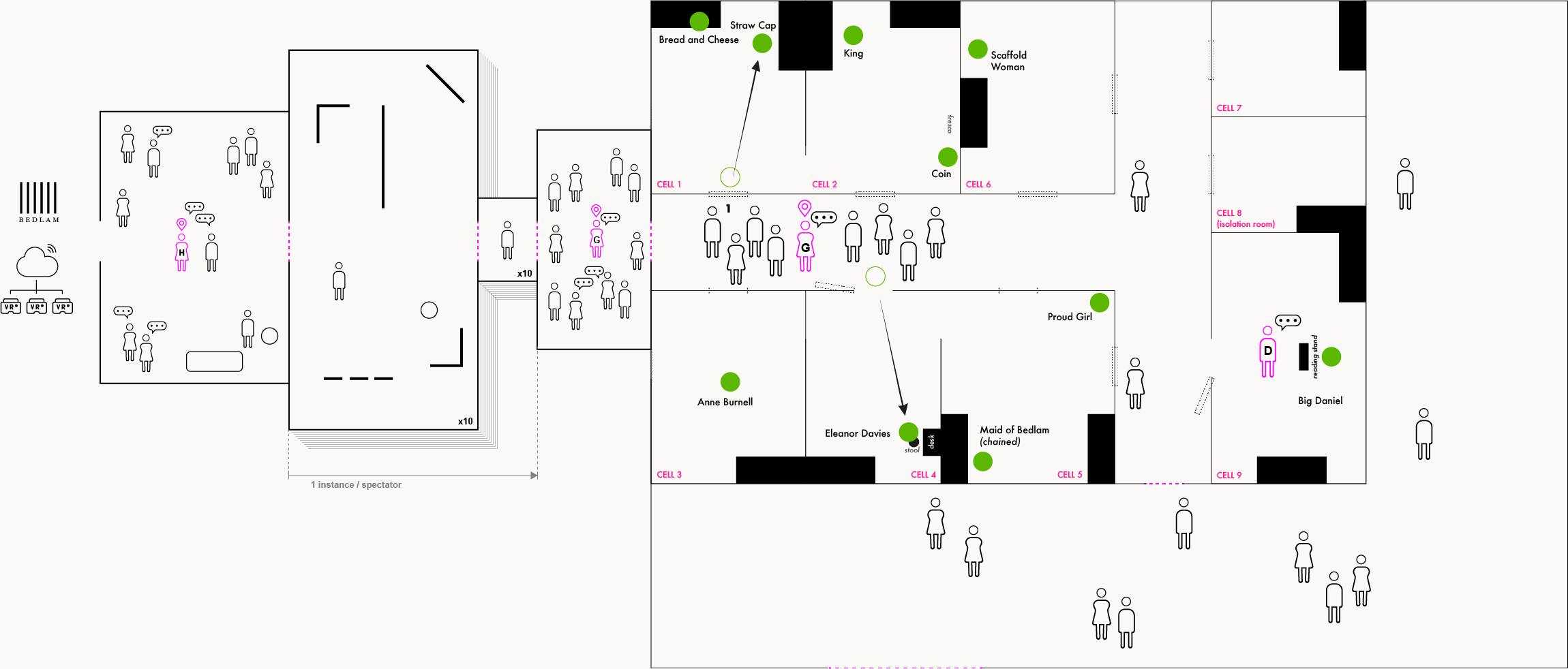
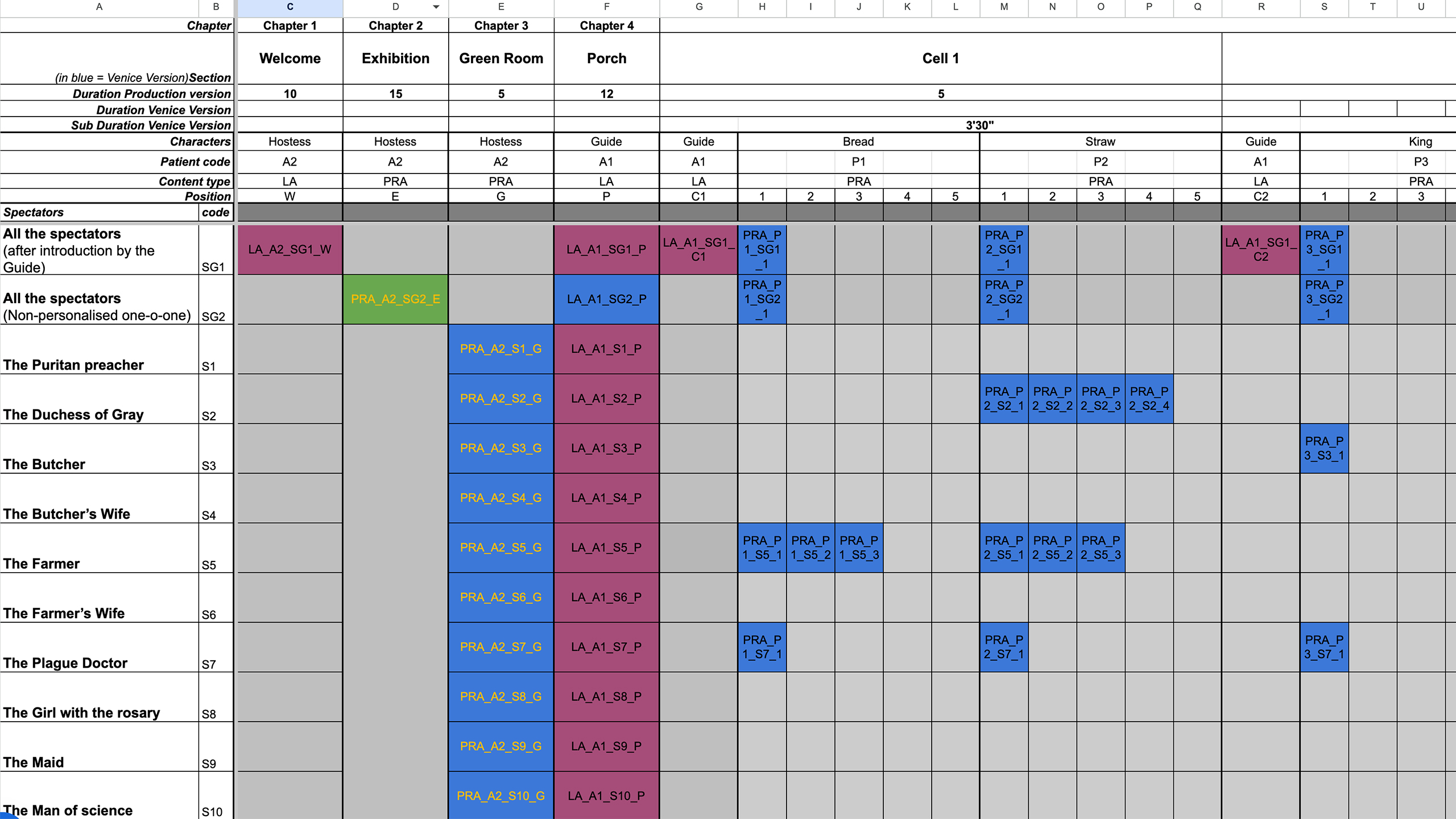
Experience Floor Plan (BEDLAM)

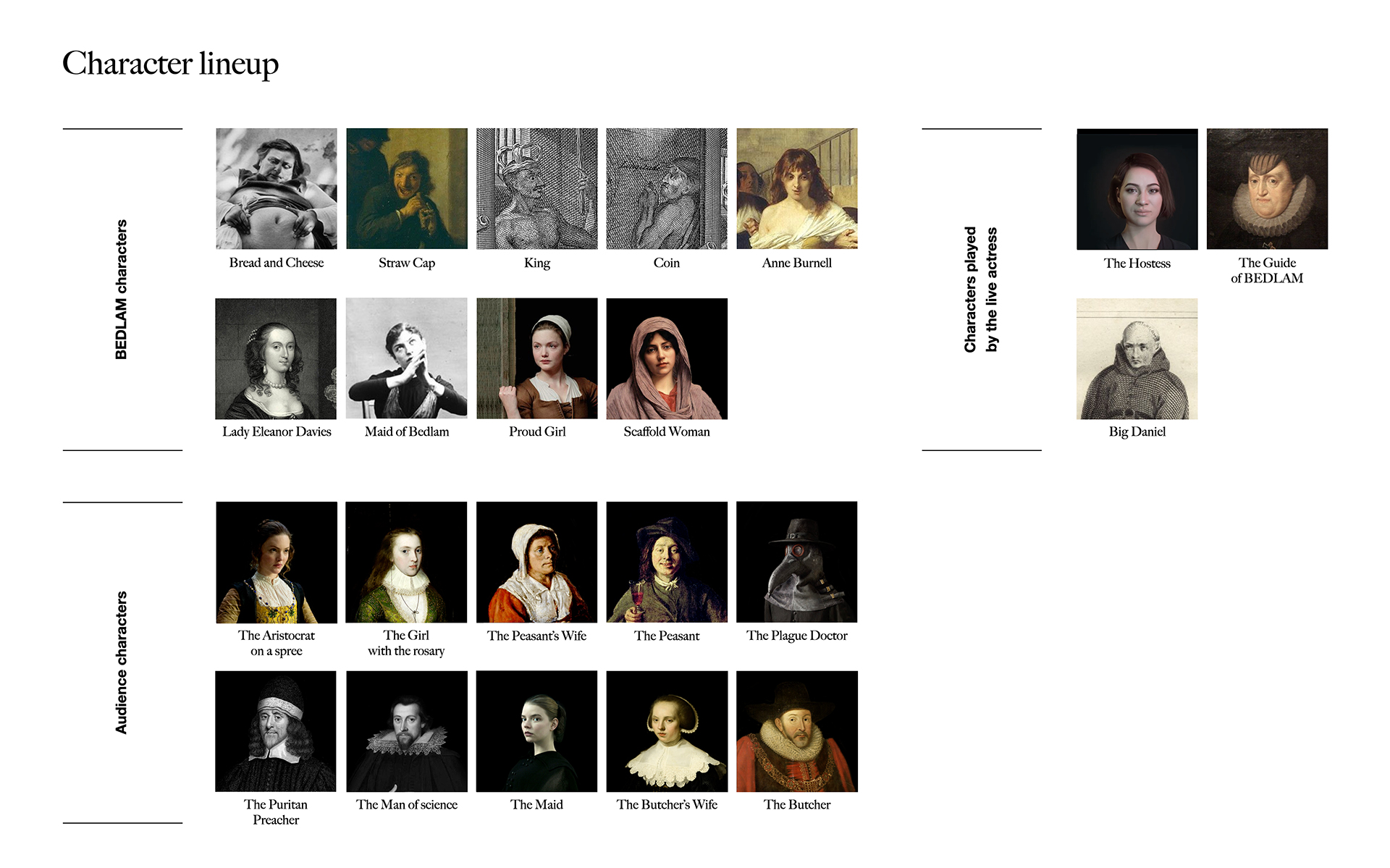
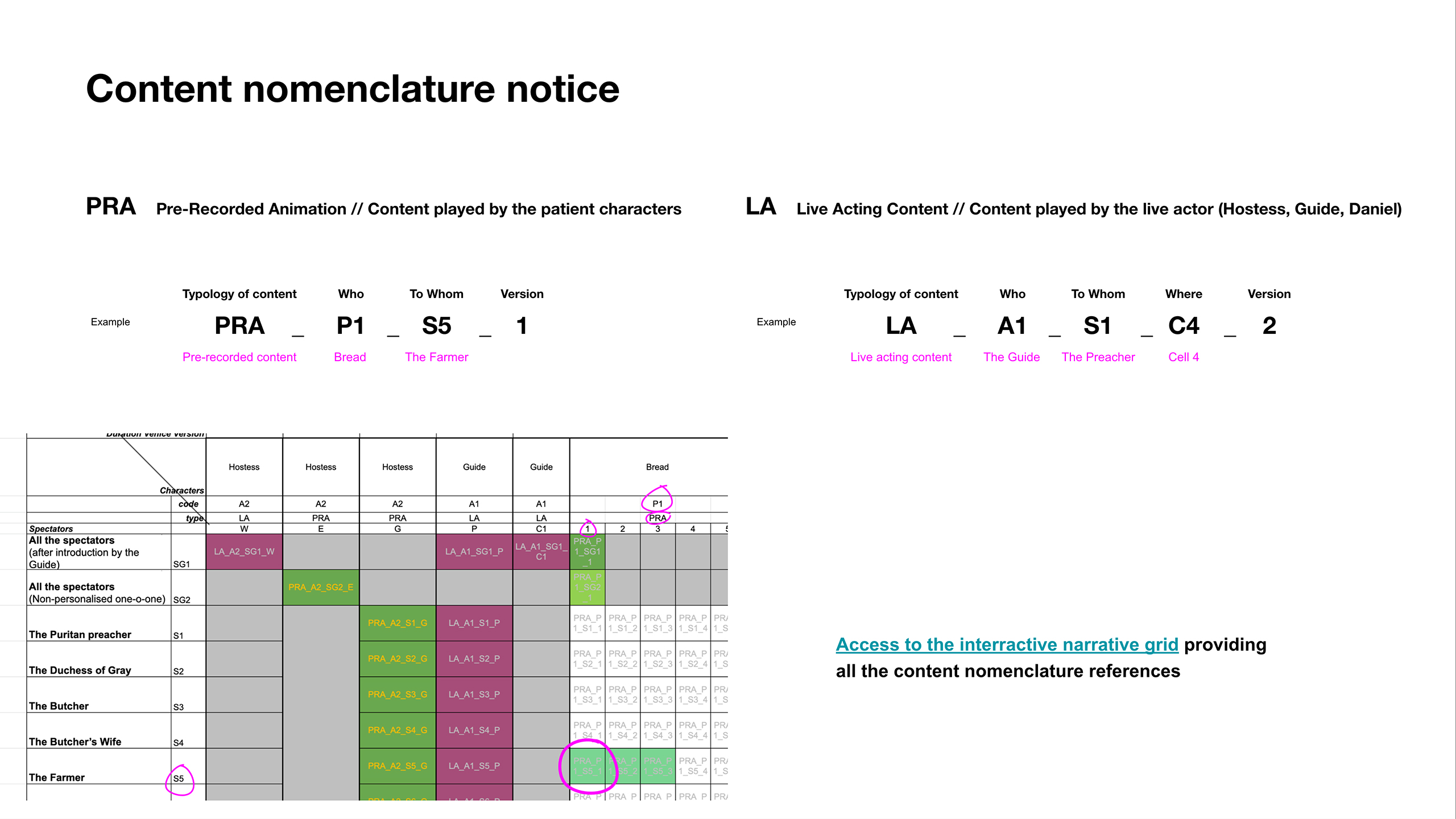
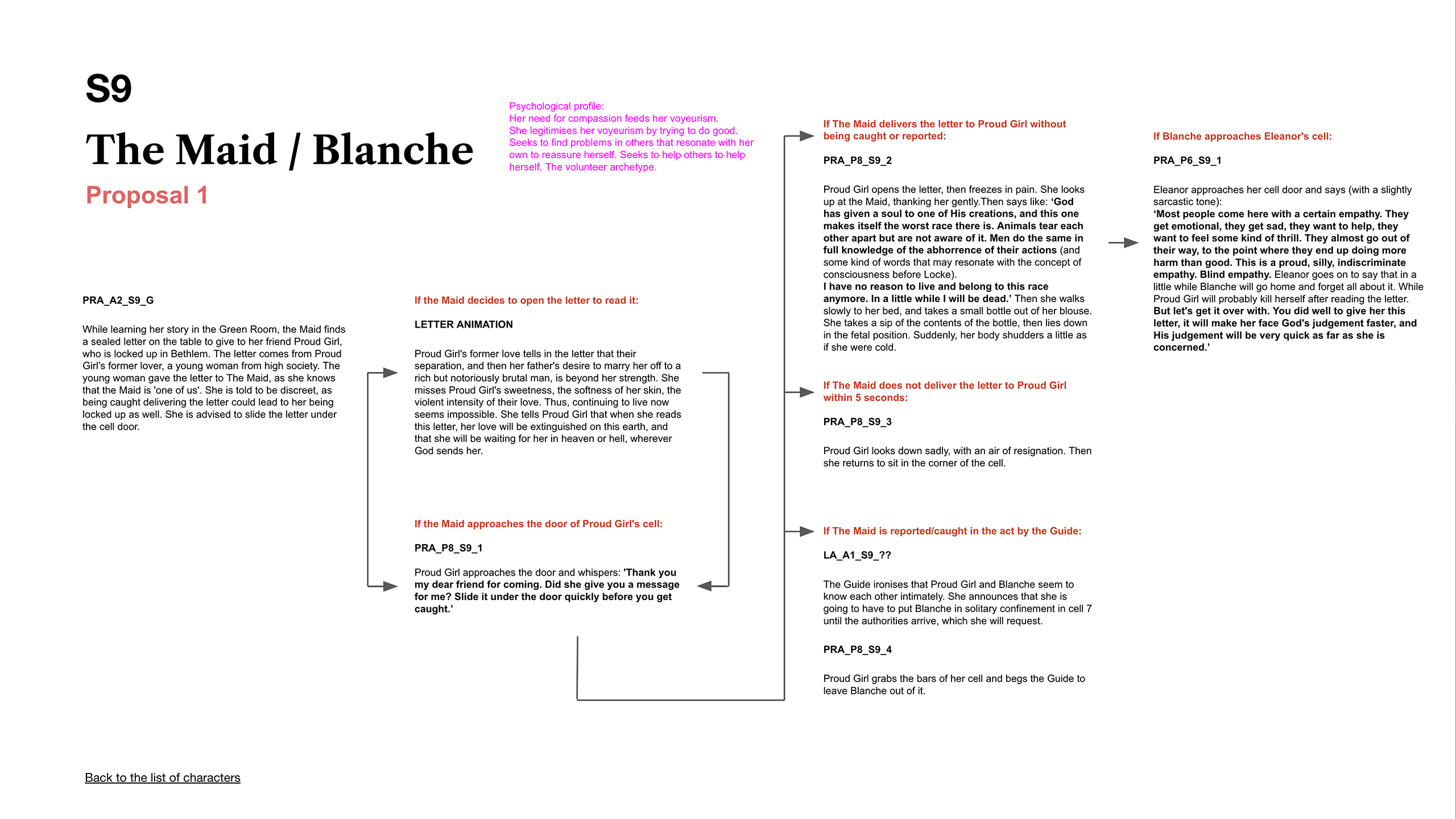
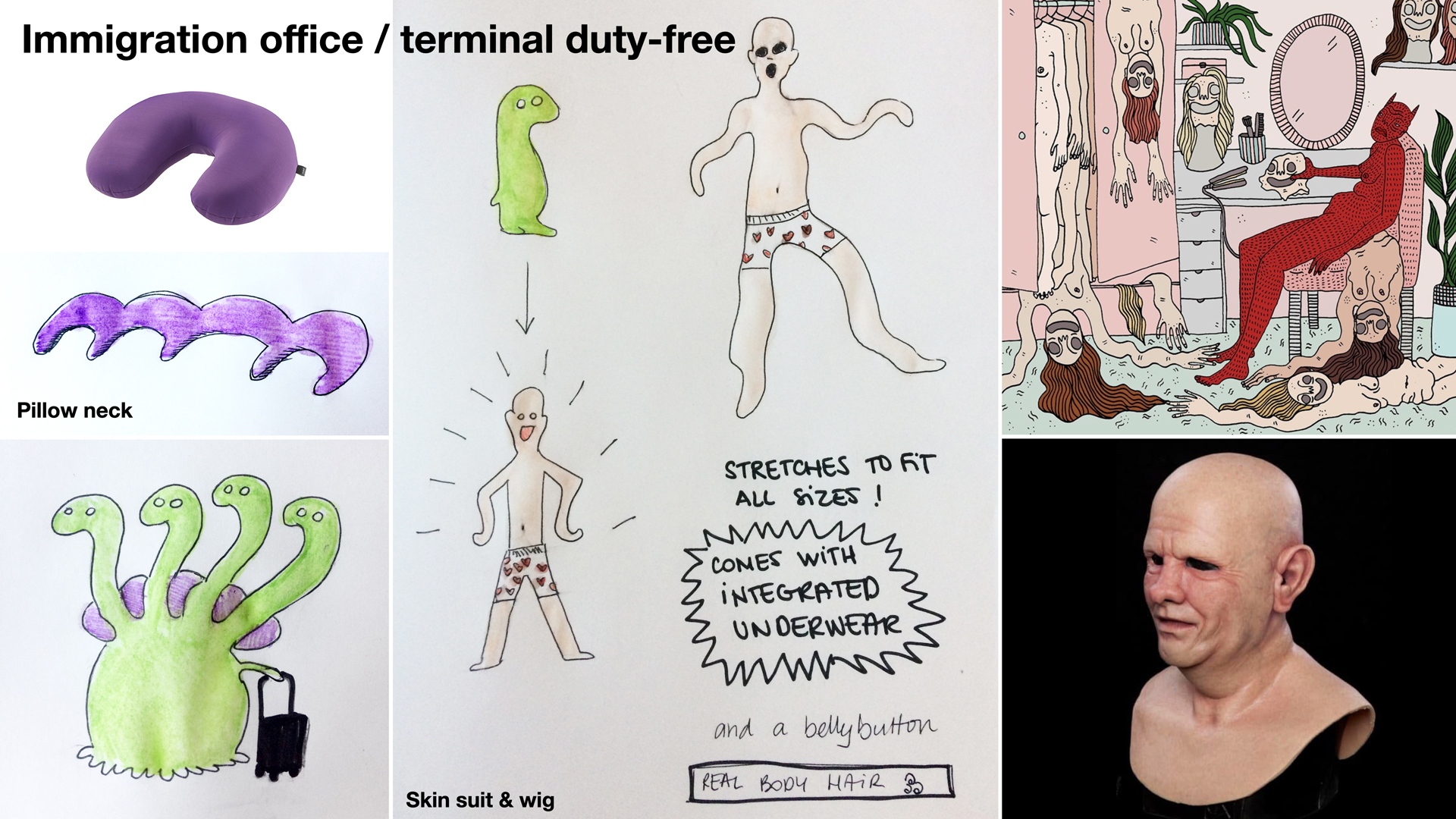
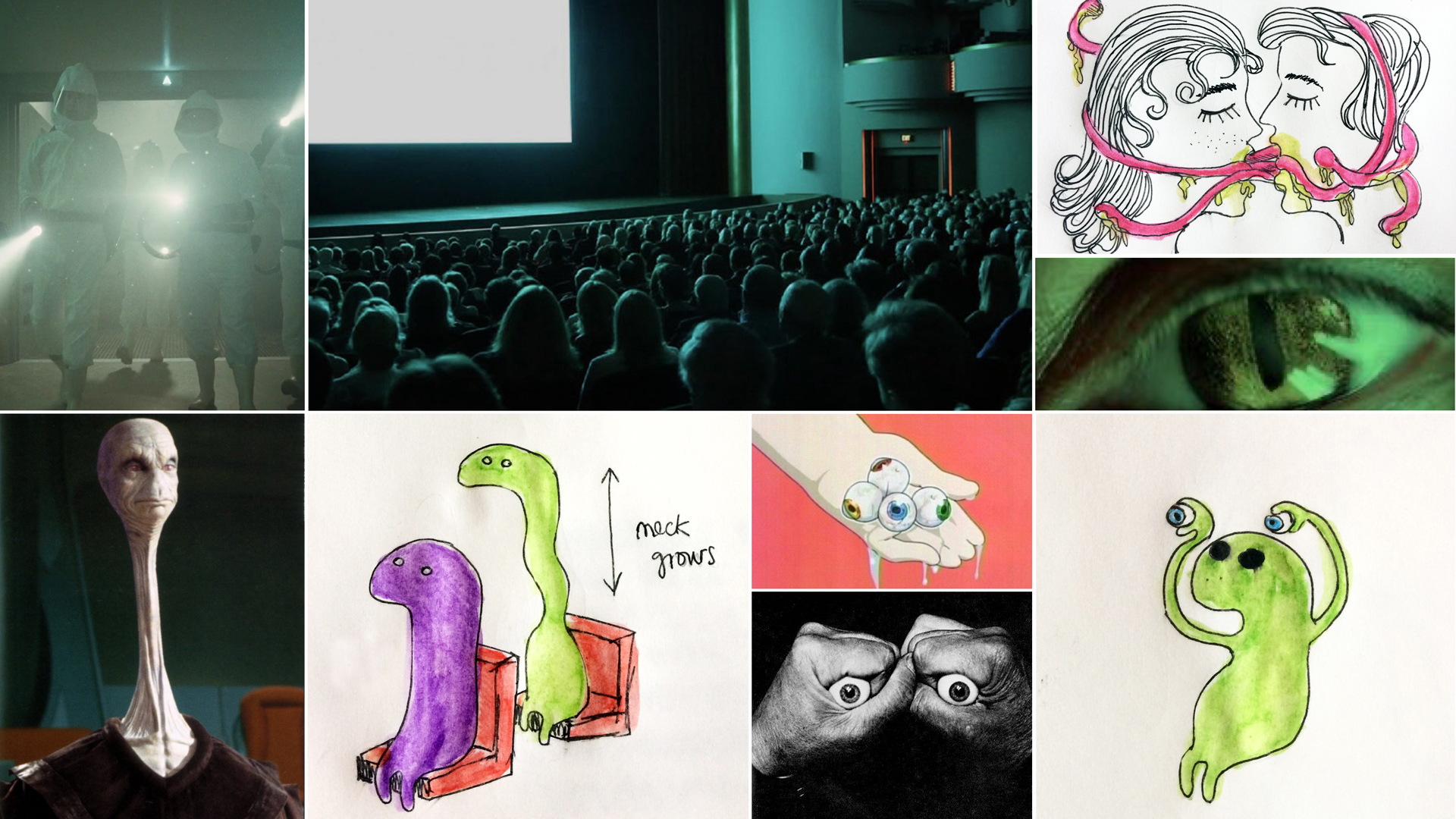
That means building character bibles where a performer’s role is defined not as lines to recite but as a psychological territory to inhabit — so they can improvise truthfully with whoever is in front of them. It means drawing experience floor plans where every square metre is a narrative beat. Writing per-spectator breakdowns that choreograph what each visitor sees, hears, and feels — including the moments they believe are accidental. Designing spectator profiling guides that allow the reactive actor to assign a role or read a personality in the first seconds of an encounter. Building substory mechanics that give each spectator their own arc within the larger narrative. And capturing, through narrative texture boards, all the micro-details that make a world feel alive beyond the main storyline — the creatures in the background, the strange objects on a shelf, the stories the set tells when no one is looking.

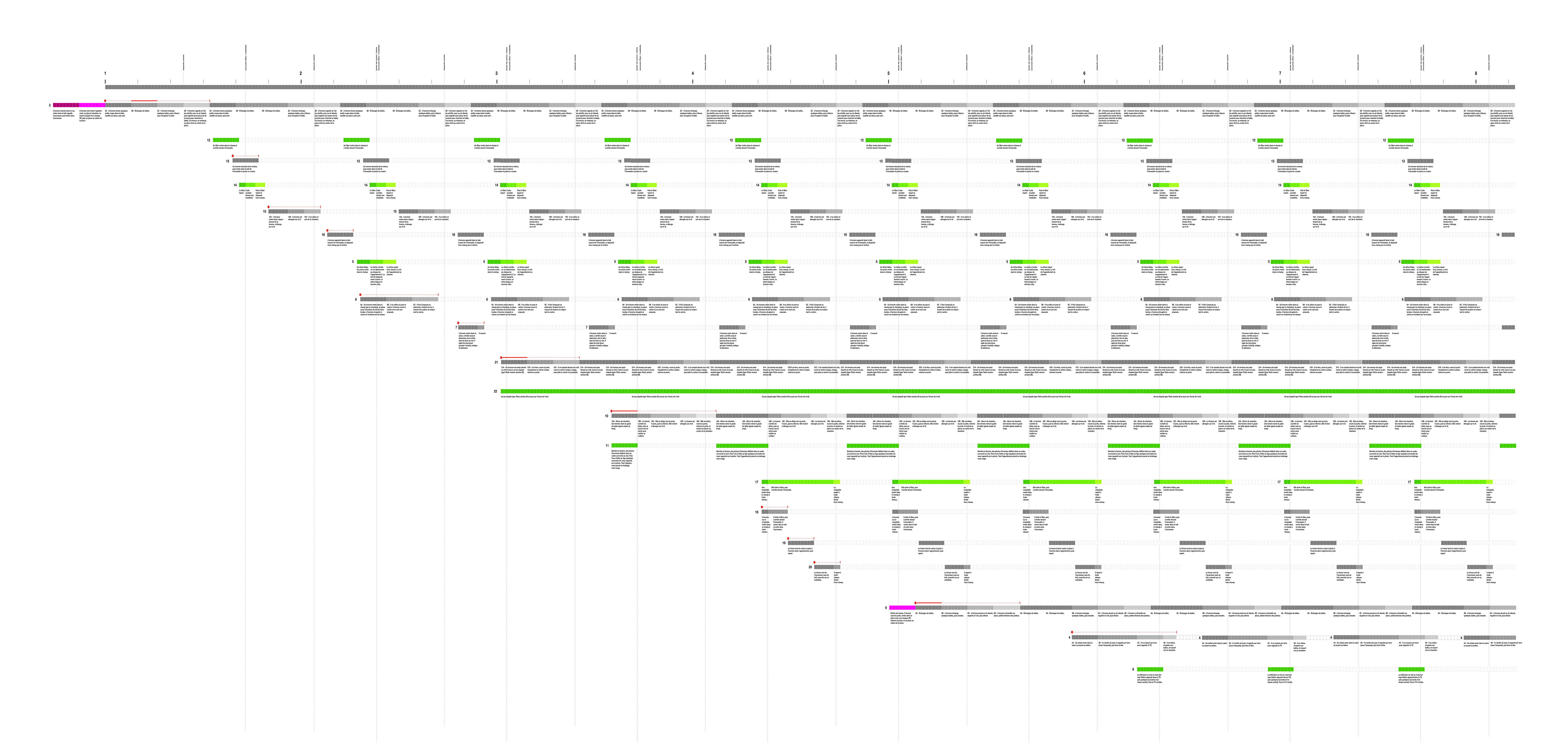
Per-spectator Narrative Breakdown (BEDLAM)

For Alice, this meant a 40-minute initiation where a single spectator is progressively pulled from observer to actor to character — and can’t tell the difference anymore. For Bedlam, ten spectators assigned 17th-century personas who discover, too late, that they’re not in a museum. For Men In Black: The Rookie, over 200 sub-stories across three giant domes. The kind of writing where no two performances are the same — because the audience IS the variable.

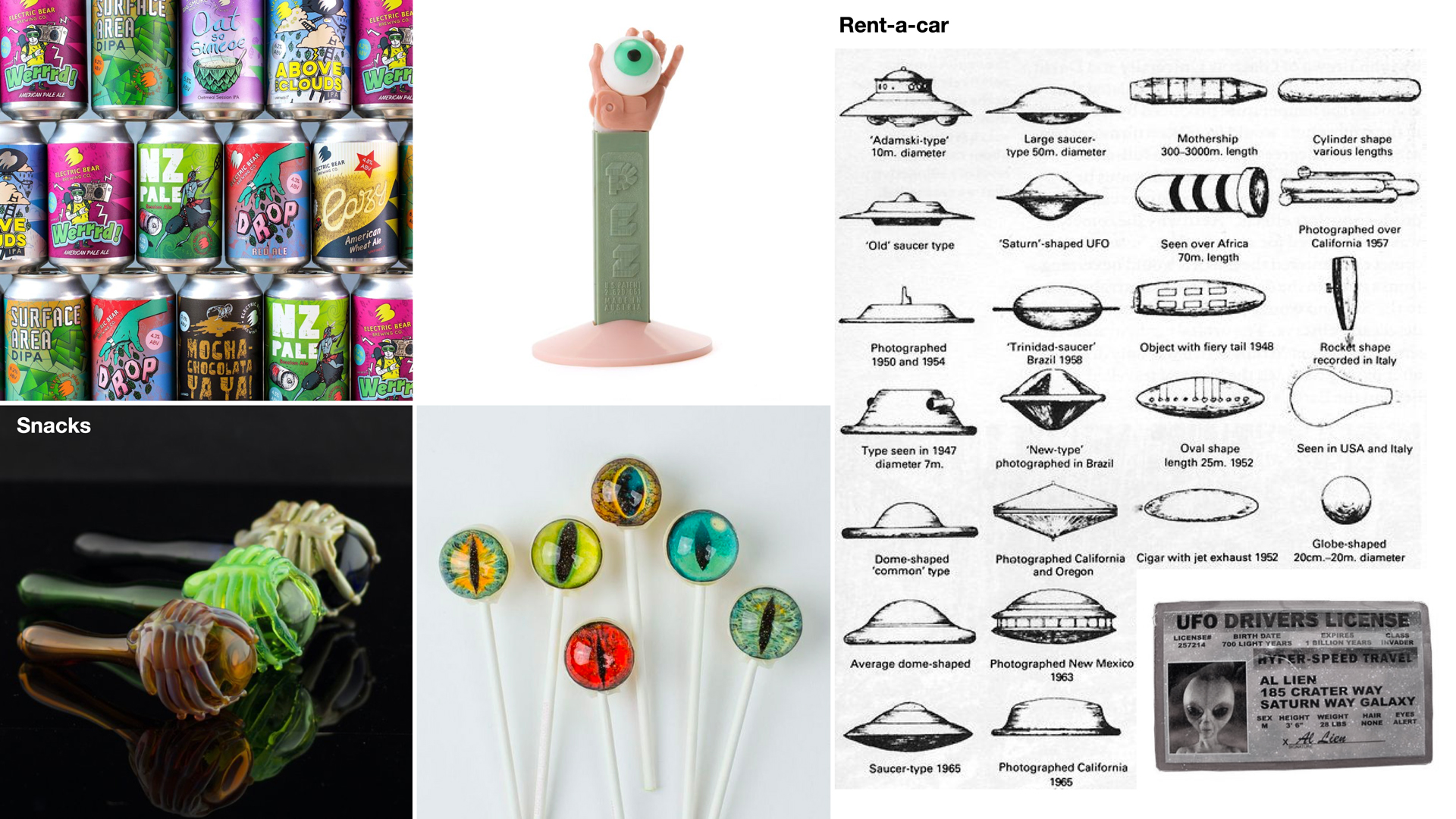
Narrative Texture Boards (Men In Black: The Rookie)

MUSIC

PHILIP GLASS

CIRCUS DIRECTION

TILDE BJÖSFORS (CIRKÜS CIRKÖK)

VISUAL DESIGN

MAT COLLISHAW

LIBRETTO

DAVID HENRY HWANG, AFTER ROBERT LAX

SET DESIGN

CHRISTIAN FRIEDLÄNDER

SET CREATIVE AND TECH CONSULTING

MARIE JOURDREN

PRODUCTION

PONT-NEUF

APPROACH.

I design experiences where the boundary between audience and story dissolves. Immersive theatre, cross-reality installations, multi-sensory retail, live performance — formats where the visitor walks into the story, touches it, alters it. From an olfactory journey through Prada’s fragrance universes with glasses-free 3D, to a multi-sensory tasting at 86 Champs-Élysées where the virtual world makes aromas visible, to a live performance at the Palais de Tokyo where dancers compose music by moving through abstract shapes.

But experience design is not just the magic — it’s the engineering behind it. I design floor plans and visitor flows to maximise throughput without breaking immersion: 10 spectators every 45 minutes in The Horrifically Real Virtuality, 60 visitors every 10 minutes in Men In Black: The Rookie across three interconnected domes. I work within technical constraints — motion capture footprints, VR tracking zones, physical set dimensions — and turn them into creative opportunities. I think about the economic model from day one: ticket price, session capacity, staffing ratio, run duration. The Horrifically went from a prototype at Cannes to a two-month commercial run at Centre Phi in Montreal with 75% average occupancy. Each project is a space where people forget they’re in a show — and a system designed to make that sustainable.

The experience doesn’t start at the door and end at the exit. I design the full arc: the pre-show — the mysterious invitation, the dress code, the anticipation that starts building days before; the post-show — the debrief, the shareable moment, the artifact you take home; and the marketing content that wraps around it all — trailers, teasers, social campaigns, mockumentaries, activation reels. The story extends far beyond the walls of the experience.