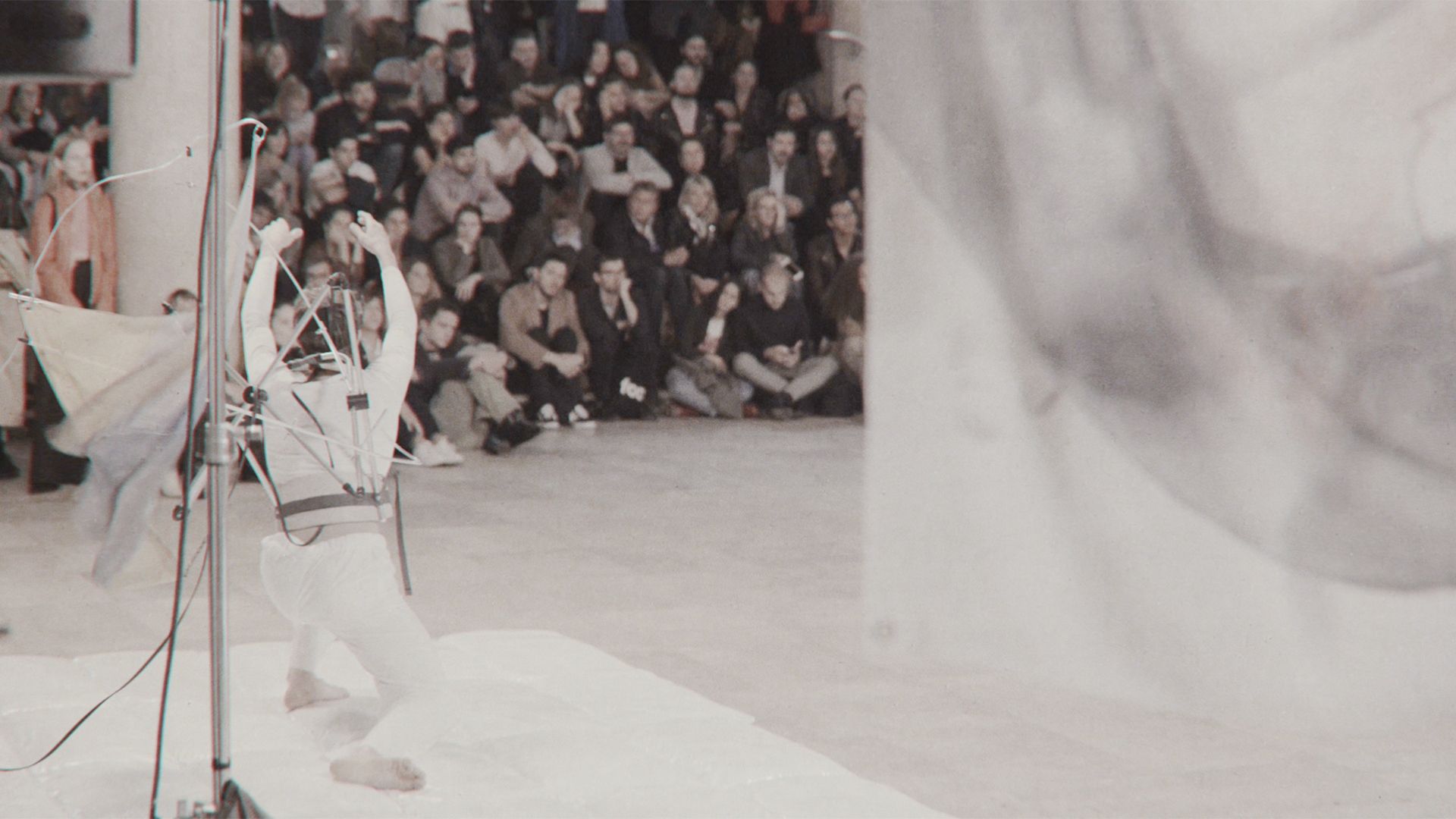
I design experiences where the boundary between audience and story dissolves. Immersive theatre, cross-reality installations, multi-sensory retail, live performance — formats where the visitor walks into the story, touches it, alters it. From an olfactory journey through Prada’s fragrance universes with glasses-free 3D, to a multi-sensory tasting at 86 Champs-Élysées where the virtual world makes aromas visible, to a live performance at the Palais de Tokyo where dancers compose music by moving through abstract shapes.
But experience design is not just the magic — it’s the engineering behind it. I design floor plans and visitor flows to maximise throughput without breaking immersion: 10 spectators every 45 minutes in The Horrifically Real Virtuality, 60 visitors every 10 minutes in Men In Black: The Rookie across three interconnected domes. I work within technical constraints — motion capture footprints, VR tracking zones, physical set dimensions — and turn them into creative opportunities. I think about the economic model from day one: ticket price, session capacity, staffing ratio, run duration. The Horrifically went from a prototype at Cannes to a two-month commercial run at Centre Phi in Montreal with 75% average occupancy. Each project is a space where people forget they’re in a show — and a system designed to make that sustainable.
The experience doesn’t start at the door and end at the exit. I design the full arc: the pre-show — the mysterious invitation, the dress code, the anticipation that starts building days before; the post-show — the debrief, the shareable moment, the artifact you take home; and the marketing content that wraps around it all — trailers, teasers, social campaigns, mockumentaries, activation reels. The story extends far beyond the walls of the experience.